
How can environmental evidence better inform policy decisions and support the development of more sustainable hydrogen technologies?
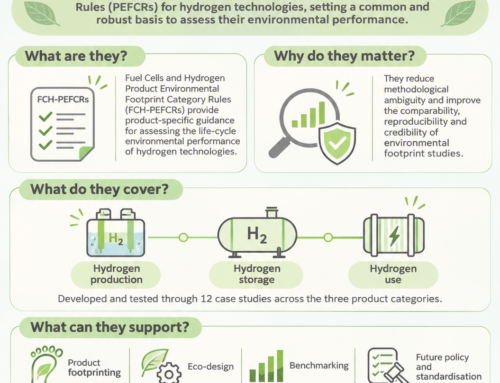
Building on three years of research and methodological development, HyPEF has reached two other important milestones: the successful completion of the independent external review of its Product Environmental Footprint Category Rules (FCH-PEFCRs) and the development of a policy brief translating the project’s findings into actionable recommendations for policymakers and public institutions.
The external review, carried out by an independent panel of experts, helped strengthen the methodological robustness and practical applicability of the final rules, marking an important step towards more reliable environmental assessments of hydrogen technologies.
The policy brief addresses a key challenge for the sector: environmental assessments often rely on different methods, assumptions and data sources, making it difficult to compare results and use them effectively in policy and investment decisions.
To overcome this fragmentation, HyPEF proposes a common framework combining product categorisation, harmonised environmental footprint rules and dedicated life cycle datasets. Together, these elements can make environmental information more transparent, reproducible and comparable, providing a stronger evidence base for decision-making.
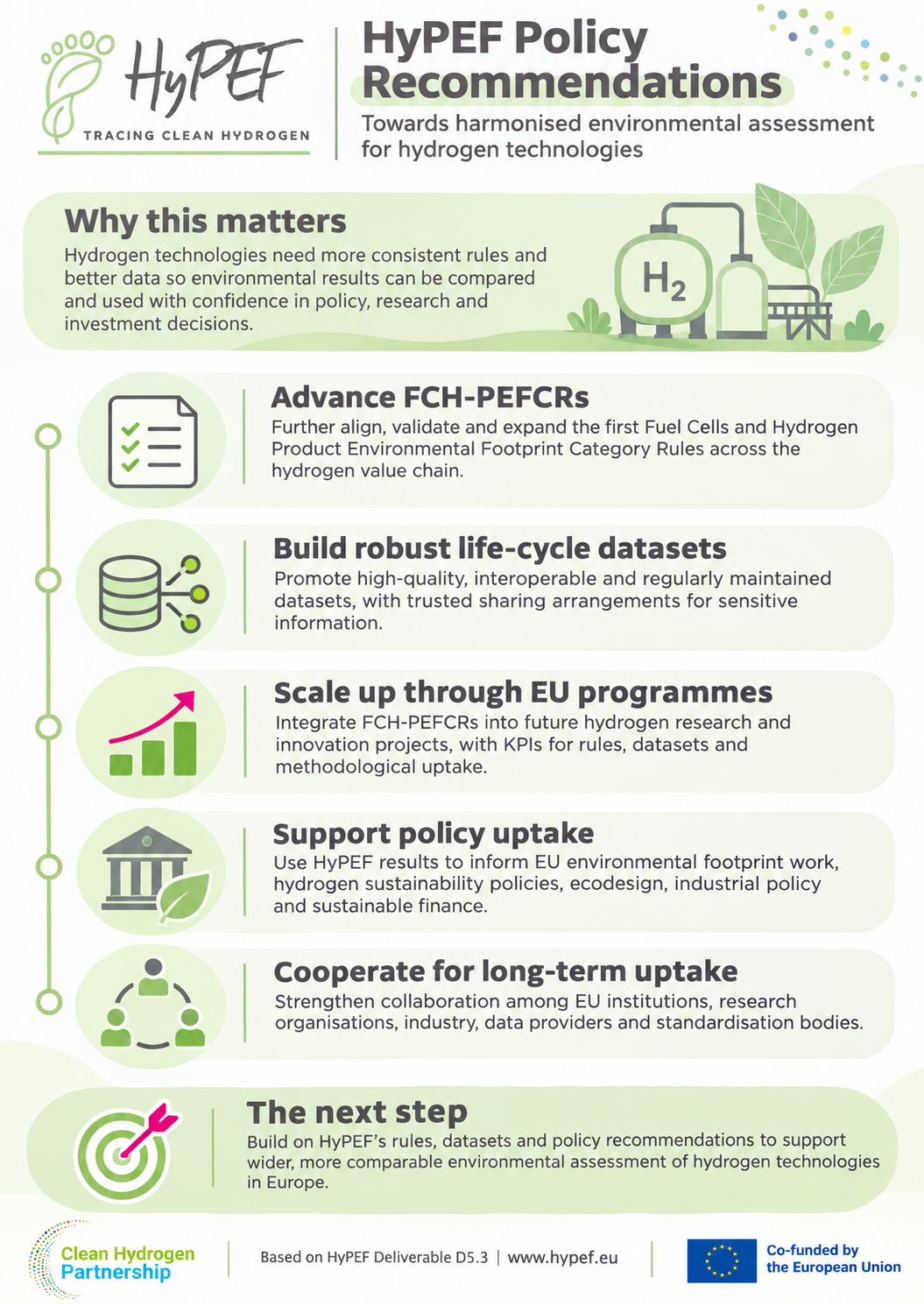
The resulting recommendations call for the continued uptake of FCH-PEFCRs, greater investment in high-quality environmental data and research and innovation programmes supported by clear indicators to track progress.
The wider impact? A more consistent approach to measuring environmental performance that can inform future European policies, support sustainable-by-design innovation and guide industrial decisions towards a more environmentally responsible hydrogen economy.